Why Do I Sabotage Myself? – Have you ever found yourself wondering why you keep getting in your own way? Perhaps you have finally been given an opportunity you have wanted for years, only to procrastinate until you risk losing it. Maybe you meet somebody kind and genuinely interested in you, then suddenly become distant, suspicious or difficult to reach. Perhaps you begin a project full of enthusiasm, make real progress and then, just when things start going well, you stop.
You may promise yourself that this time will be different. You know what you want, you know what you need to do and you may even understand perfectly well what you are doing when you begin slipping back into the same old behaviour. Yet somehow, you find yourself doing it again. You give up, avoid, procrastinate, push somebody away, spend money you cannot afford, distract yourself from what matters or convince yourself that something will never work before you have given it a proper chance. Eventually, the question becomes painfully familiar: Why do I sabotage myself?
It is a question that can carry an enormous amount of frustration and self-blame. We look at ourselves and think that we are our own worst enemy, wondering why we would deliberately destroy the very things we say we want. I would like to suggest something that may initially sound rather strange: what if you are not deliberately trying to destroy your life at all? What if at least some of what you call self-sabotage is actually something else?


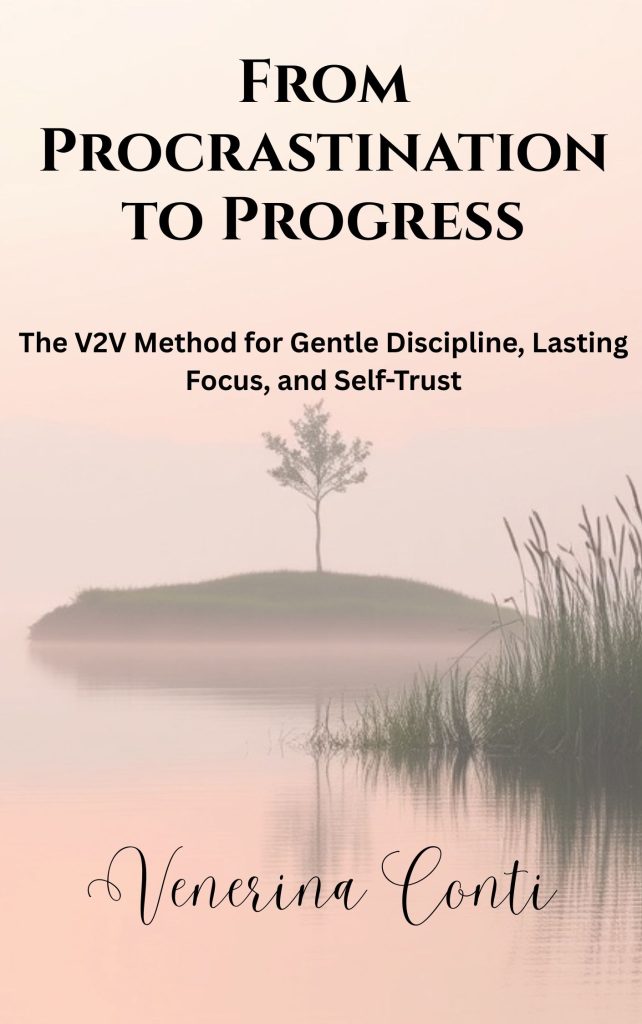
This question sits very close to the heart of my book, From Victim to Victory: Why You Feel Broken, How You Heal, and the Path Back to Yourself. One of the ideas I explore throughout the book is that we are often far too quick to assume there is something fundamentally wrong with us. We see a behaviour we dislike, recognise that it is causing problems and immediately conclude that we are weak, lazy, damaged or incapable of changing. Human beings, however, are rarely quite that simple. Sometimes the behaviour that is making your life difficult today began as a way of protecting you yesterday.
That is where our understanding of self-sabotage needs to become a little more compassionate and a great deal more honest. When we use the words self-sabotage, we tend to imagine that somewhere inside us there is a destructive little creature deliberately waiting to ruin everything. You finally start doing well and there it is, pulling the plug. You fall in love and it immediately begins creating problems. You start to succeed and suddenly it convinces you that you are a fraud who will eventually be found out. Of course, it can genuinely feel that way when you repeatedly behave in ways that move you further away from the life you want.
Wanting something consciously, however, does not necessarily mean that every part of you experiences getting it as safe. Your conscious mind may say that you want to succeed, while another part of you has learned that success brings pressure, criticism, responsibility or expectations. You may consciously say that you want a loving relationship, while another part of you associates emotional closeness with disappointment, rejection, loss or pain. You may desperately want to change your life, but another part of you may be frightened of uncertainty because, however unhappy your present circumstances may be, at least they are familiar.

Familiarity can be extraordinarily powerful. We often assume that human beings naturally move towards happiness, but that is not always how our internal patterns work. Very often, we move towards what is known, even when what is known is painful. You can become familiar with anxiety, chaos, disappointment, struggle and emotional instability. You can become accustomed to fighting for attention or approval, constantly expecting something to go wrong or living with the belief that good things never last. You can even become familiar with failure.
Then something different appears in your life. Something calmer, healthier or more stable. Something that might actually give you what you have always said you wanted. Strangely, instead of feeling completely comfortable, you may begin to feel unsettled. The unfamiliar can sometimes feel threatening simply because it is unfamiliar. This does not mean that you consciously want to ruin things. It may simply mean that part of you has learned to recognise the familiar more easily than the healthy.
This is one of the reasons I believe it is important to look beneath the word self-sabotage. If we simply call ourselves destructive, stupid or weak, we learn nothing. We remain trapped in the same pattern while becoming increasingly ashamed of ourselves for having it. Curiosity gives us another possibility. Instead of asking what is wrong with us, we can begin asking a far more useful question: What is this behaviour actually doing for me?


The answer can sometimes be uncomfortable because it may reveal things we would rather not see. Perhaps procrastination protects you from the possibility of failure. If you never completely finish something, nobody can completely judge it. Perhaps giving up early protects you from disappointment. If you convince yourself that something will never work, you do not have to experience the pain of discovering that it might not. Perhaps pushing people away protects you from the possibility of being abandoned, because if you leave emotionally before somebody else leaves physically, you may feel as though you have retained some control.
Perhaps staying small protects you from criticism, while never quite succeeding protects you from the pressure that success might bring. Perhaps remaining in familiar unhappiness feels safer than risking an unfamiliar future. None of this means that these patterns are helping you now. They may be exhausting you, limiting your relationships and preventing you from creating the life you genuinely want. Understanding why a pattern developed, however, is very different from hating yourself for having it.
This was one of the important ideas behind From Victim to Victory. We often describe ourselves as broken when it may be more accurate to understand ourselves as adapted. Something broken has failed, while something adapted has responded. That does not mean every adaptation remains useful forever. A response that helped you survive one period of your life may become a prison in another. Unfortunately, our minds do not send us a neat little notification saying, “Congratulations, that particular protection mechanism is no longer required. Please uninstall immediately.”

Instead, we can continue responding to situations as though the old danger were still present, even when our lives have changed completely. You may no longer be the child who had to work desperately hard for approval, but you may still feel that you have to earn your right to rest. You may no longer be in the relationship that hurt you, but you may still expect the next person to do the same. You may no longer be living in an unpredictable environment, but your mind may still be constantly scanning for what could go wrong. You may no longer need to protect yourself in the ways you once did, but those patterns can become so automatic that you barely notice them until you find yourself wondering why you have done exactly the same thing again.
This is why self-awareness is so important. It is not because becoming self-aware magically solves everything, but because you cannot consciously change a pattern you cannot see. This is where the first stage of the V2V Method, explored in From Victim to Victory, becomes particularly relevant: Veritas.
Veritas means truth, although I am not talking about the cruel kind of truth that many of us have become experts at using against ourselves. I do not mean standing in front of the mirror of your life and listing every mistake you have ever made. I mean having the courage to look honestly at what is happening and becoming curious about the pattern rather than immediately condemning yourself for it.
When do you sabotage yourself? What usually happens immediately before it? What are you feeling at that moment? What are you afraid might happen if you actually succeed? What would change if you finally got the thing you say you want? What might you lose? Perhaps the most important question of all is this: what is this pattern trying to protect you from?
These questions can reveal an enormous amount. Sometimes what looks like laziness is fear. What looks like indifference may be disappointment waiting to happen. What appears to be procrastination may actually be perfectionism wearing a rather clever disguise. What looks like self-sabotage may be an attempt to avoid vulnerability.
Sometimes the thing you are trying so desperately to achieve represents a change in identity that part of you is not yet ready to accept. Imagine somebody who has spent their entire life believing that they are unsuccessful. They finally begin creating something that has genuine potential and, suddenly, success is no longer an abstract dream. It is becoming possible. Success, however, changes things. Other people may expect more from them. They may have to become more visible, take responsibility for something bigger or allow themselves to be seen differently. They may even have to let go of the familiar identity of being the person who never quite makes it.


That can be surprisingly frightening. It does not mean they consciously prefer failure. Human beings can develop powerful attachments to the identities they have known for years, even when those identities make them unhappy. We can become comfortable with stories that limit us simply because we know them so well.
One of the most frustrating things about self-sabotage is that we often know perfectly well what we are doing. You may recognise the pattern while it is happening and think, There I go again. You may even understand why you are doing it, yet understanding does not always immediately produce change. This is something I believe is terribly misunderstood in the world of personal development. We are often given the impression that insight and transformation are the same thing, as though understanding your problem should automatically mean that you are able to change it.
Knowing is important, but it is only part of the journey. You can understand exactly why you procrastinate and still procrastinate. You can know why you repeatedly choose emotionally unavailable people and still feel drawn towards them. You can understand that you are afraid of failure and still avoid every opportunity that might expose you to it. Eventually, understanding has to become movement.
This is where the second stage of the V2V Method becomes important: Kinesis. Kinesis means movement, and I deliberately developed this stage around the idea that transformation cannot simply remain an intellectual exercise. At some point, you have to begin doing something differently, although that does not mean changing your entire life overnight or making dramatic promises that collapse within a week.
Change can begin with something very small. Perhaps you notice the moment you normally abandon a project and decide to continue for another ten minutes. Perhaps you recognise the urge to push somebody away and, instead of disappearing, tell them honestly that you are struggling. Perhaps you notice yourself creating chaos because things have become unusually calm and ask whether calm itself feels unfamiliar to you. Perhaps you catch yourself thinking, What’s the point? It will probably fail anyway, and begin to recognise that sentence as an old pattern rather than an unquestionable truth.
This is how meaningful change often begins: through small interruptions in automatic behaviour and those increasingly important moments when you realise that you have a choice. The choice may feel uncomfortable because, if the old pattern developed as a form of protection, doing something different can initially feel unsafe. Feeling unsafe, however, does not necessarily mean that you actually are unsafe. Sometimes it simply means that you are moving beyond something familiar.
If you have ever changed something for a while and then found yourself slipping back into your old behaviour, you will know how easy it is to become discouraged. You may think, There you are. I knew I couldn’t change. Returning to an old pattern, however, does not mean that you have failed. It means that the pattern is familiar, deeply established and easily triggered when you are tired, stressed, frightened or overwhelmed.
This is why lasting change requires more than simply deciding that you will never do something again. You also need to develop a different relationship with yourself when you struggle. This brings us to the third stage of the V2V Method: Valor.
Valor is not about becoming hard, emotionally invulnerable or pretending that nothing affects you. I do not believe genuine strength means becoming somebody who never struggles. Valor is about developing a steadier and more compassionate relationship with yourself, particularly when you make mistakes.
This is where many people unknowingly sabotage themselves for a second time. First, they fall into the old pattern. Then they attack themselves for it. They tell themselves they are useless, decide that nothing has changed and use one mistake as proof that they will always be this way. The shame that follows can then become another trigger for the very behaviour they are trying to escape.
The cycle continues, not necessarily because they are incapable of changing, but because they have learned to turn every setback into evidence against themselves.
You can have a bad day without destroying your progress. You can fall back into an old habit without returning to the beginning. You can make a mistake without turning it into proof that you are fundamentally incapable of changing. Learning to respond differently when you stumble is just as important as learning to behave differently in the first place.
The truth is that there is no single explanation for every form of behaviour we describe as self-sabotage. The reasons will be different for every person. Sometimes there are practical reasons, sometimes emotional ones and sometimes deeply established patterns may benefit from being explored with the support of a qualified professional.
Before automatically concluding that you are your own worst enemy, however, consider another possibility. Perhaps you are not consciously trying to destroy the things you want. Perhaps part of you is trying to protect you using methods that no longer work. Perhaps the behaviour that frustrates you so much has a history and, at some point in your life, made sense.
Understanding that history does not mean remaining trapped in it. Understanding is the beginning of becoming free enough to choose something different. That journey lies at the heart of From Victim to Victory: Why You Feel Broken, How You Heal, and the Path Back to Yourself. The book explores why we can feel broken when many of the patterns we carry are actually adaptations, and how we can begin moving from unconscious survival patterns towards greater awareness, conscious movement and a stronger relationship with ourselves.
The V2V Method begins with Veritas, having the courage to see what is really happening. It continues with Kinesis, the willingness to begin moving differently, even when that movement is small, and develops through Valor, the gradual rediscovery of a strength that does not depend upon punishing yourself every time you fall.
If you have been asking yourself, Why do I sabotage myself?, perhaps the next question is not, Why am I so determined to ruin my own life? Perhaps a gentler and far more useful question would be: What am I afraid might happen if I stop? What is this pattern trying to protect me from? When did I learn that this was necessary, and what small thing might I do differently now?
You may eventually discover that the person you have spent years fighting against is not actually your enemy. You may simply be someone who learned to survive in ways that no longer serve you.
Perhaps the journey forward does not begin with fixing yourself at all. Perhaps it begins with understanding why you became this way in the first place and recognising that, although the past may explain some of your patterns, it does not have to dictate every choice you make from this moment forward.
If this question feels painfully familiar and you would like to explore these ideas more deeply, From Victim to Victory: Why You Feel Broken, How You Heal, and the Path Back to Yourself takes you further into this journey through the V2V Method and the three movements of Veritas, Kinesis and Valor. It was written for those who are tired of asking what is wrong with them and are ready to begin asking a different question: what happened, what did I learn from it, and how do I find my way back to myself?
Can Emotional Pain Cause Chronic Physical Pain? Understanding the Relationship Between Emotional Suffering and the Body
Navigating Emigration and Repatriation: Challenges, Realities, and Practical Tips for a Smoother Transition