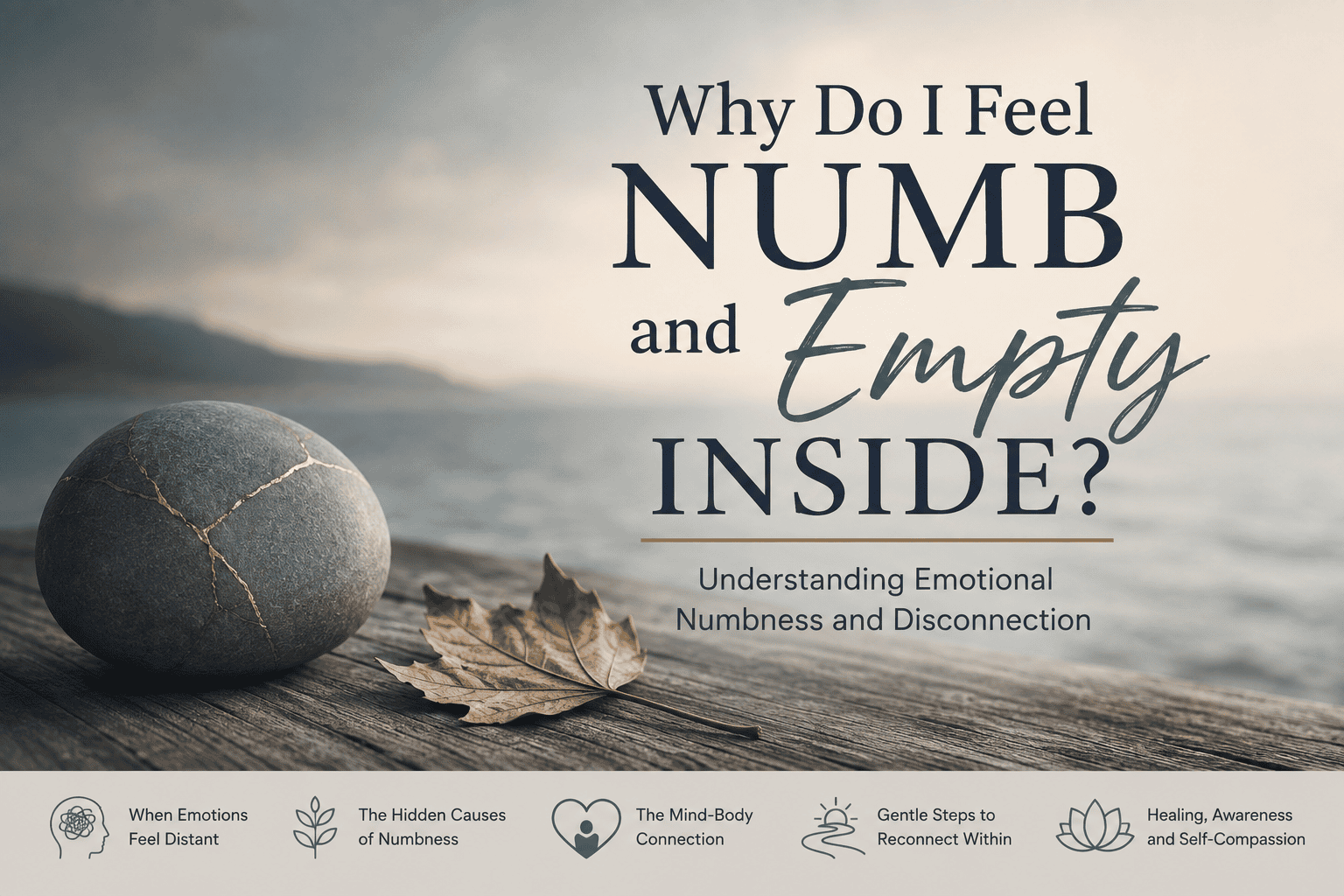
Why do we store emotions in the body? Have you ever noticed that grief seems to settle in the chest, anxiety tightens the stomach, anger hardens the jaw, and fear weakens the knees? Have you ever caught yourself saying, “I carry the weight of the world on my shoulders,” or “I have a gut feeling that something isn’t right”? These expressions have existed for centuries, long before modern psychology, neuroscience, and psychophysiology began investigating the relationship between emotional experiences and physical sensations.
The question is simple: do we really store emotions in the body?
The answer depends largely on how we define the word “store.” Emotions are not preserved inside muscles in the same way that water is stored inside a reservoir or books are stored on a shelf. However, emotional experiences can profoundly influence the nervous system, alter physiological processes, shape posture, affect movement, and create patterns of tension that may persist for years. In this sense, the body remembers experiences long after the conscious mind believes it has moved on.
Modern neuroscience increasingly supports the idea that emotional experiences cannot be separated from physical responses. Thoughts influence hormones. Hormones influence behaviour. Behaviour influences physiology. The mind and body are not separate systems competing for dominance. They are components of the same integrated network.
This perspective appears repeatedly throughout the V2V series, which challenges the traditional tendency to divide emotional experiences into neat psychological categories while ignoring the body’s role in adaptation. Across several of the books, one central principle emerges repeatedly: human beings are not broken; they are adapted. Emotional suffering often represents an intelligent response to circumstances rather than evidence of weakness or failure. This idea forms the foundation of From Victim to Victory, From Depression to Power, From Addiction to Freedom, and From Stuck to Free.


For decades, psychology concentrated primarily on cognition. Thoughts were considered the principal drivers of emotional distress. Change, therefore, was believed to occur through the modification of thoughts and behaviours. Although these approaches have helped millions of people, they do not always explain why individuals continue repeating harmful patterns despite understanding them intellectually.
Many people recognise their emotional patterns with remarkable clarity. They understand why they overeat, why they remain in unhealthy relationships, why they procrastinate, why they struggle with anxiety, or why they continue engaging in behaviours they know are damaging. Yet understanding alone often fails to create lasting change.
Why? Because insight and regulation are not the same thing.
One of the most important observations in From Addiction to Freedom is that behaviour that appears self-destructive often began as a form of protection. The mind learns which actions reduce tension, numb emotional pain, or provide temporary relief. Once these associations become established, they can continue long after the original circumstances have disappeared. The nervous system simply continues using the same strategies it once learned to survive.
This has enormous implications for understanding emotional storage within the body.
When a child grows up in an unpredictable environment, the nervous system adapts. Hypervigilance develops. Muscles remain slightly contracted. Stress hormones become chronically elevated. The body learns that safety cannot be assumed.
Similarly, an individual who repeatedly experiences criticism may unconsciously tighten the chest and shoulders whenever they enter social situations. Someone who has experienced betrayal may develop chronic digestive problems during periods of emotional vulnerability. A person who has lived through years of caregiving, loss, or chronic stress may eventually experience exhaustion, numbness, or depression. These responses are not signs of weakness. They are adaptations.
The V2V framework repeatedly emphasises that patterns that appear dysfunctional in adulthood often began as intelligent attempts to maintain safety, avoid rejection, reduce emotional pain, or preserve connection. The problem arises when the nervous system fails to recognise that the original threat no longer exists. Protection continues even when protection is no longer necessary.
This is one reason emotional experiences frequently become embodied. The body learns through repetition.
Imagine touching a hot stove. You do not need to repeat the experience many times before your nervous system learns to avoid it. Emotional experiences operate in a similar way. Repeated rejection teaches withdrawal. Repeated criticism teaches perfectionism. Repeated abandonment teaches self-protection.
Over time, these emotional lessons become less like conscious memories and more like automatic physiological responses. The remarkable thing about the nervous system is that it prioritises survival over happiness.
If remaining silent once prevented conflict, silence becomes the preferred strategy. If emotional eating once reduced distress, food becomes associated with comfort. If emotional numbing once reduced overwhelm, disconnection becomes familiar.
This process is explored extensively in From Stuck to Free, which argues that most limiting beliefs begin as protective mechanisms rather than irrational thoughts. Many of the beliefs that eventually restrict our lives originally emerged as strategies to prevent further emotional pain. The same thoughts that once protected us gradually become invisible boundaries that shape our decisions, our relationships, and our expectations.
What makes these adaptations particularly powerful is that they often operate beneath conscious awareness. You may consciously want intimacy while unconsciously expecting rejection. You may consciously want success while unconsciously fearing criticism. You may consciously desire change while unconsciously associating change with danger.
This internal conflict creates frustration because the obstacle appears invisible. From the outside, nothing seems to be preventing movement. Yet the real barrier often exists within deeply embedded patterns of belief, memory, and physiological adaptation. From Stuck to Free describes this invisible landscape as one constructed from thought, belief, memory, and meaning rather than objective reality.
Another important consideration is the relationship between chronic stress and depression.
Depression is frequently misunderstood as a purely emotional condition. Yet From Depression to Power presents a different perspective, suggesting that depression often represents the consequence of prolonged strain without sufficient safety, support, or resolution. It is not described as an enemy but as a signal.
This interpretation aligns remarkably well with what we know about physiological exhaustion.
When emotional demands remain unresolved for long periods, the nervous system does not always respond through fight-or-flight activation. Sometimes, it conserves energy. It collapses inward. Depression can represent conservation rather than defeat. It can emerge after years of emotional suppression, chronic caregiving, unresolved grief, or repeated disappointment. Importantly, it is rarely sudden. More often, it is cumulative.
This cumulative burden often manifests physically, as:
Muscles tighten.
Breathing becomes shallow.
Sleep deteriorates.
Digestion becomes disrupted.
Inflammation increases.
Energy disappears.
Many individuals eventually become disconnected from their own internal signals because they have spent years overriding them. They continue functioning, meeting responsibilities, and appearing perfectly capable while privately feeling detached from themselves and from life. Depression, in this sense, does not always appear as visible sadness. It often appears as disconnection.
Ancient healing traditions have recognised this relationship for thousands of years.
Long before functional MRI scans and neuroendocrinology, traditional healing systems proposed that emotions influenced physical health. Chinese medicine associated specific emotions with different organ systems. Ayurvedic medicine viewed emotional imbalance as inseparable from physical imbalance. Numerous contemplative traditions recognised that unresolved experiences influenced both psychological and physical functioning.
Unlock the Power Within explores this relationship extensively through discussions of the influence of thoughts and emotions on the body, energetic healing, and the connection between mind and health. The book argues that emotional experiences are not isolated events occurring exclusively within the mind. They affect the entire human system, including physical health, energetic balance, and overall well-being.
Whether one embraces energetic models literally or views them as metaphors, the underlying observation remains compelling. Human beings experience emotions physically. The sensation of heartbreak is not imaginary. Neither is the knot in the stomach before an important conversation. Neither are the trembling hands during fear. The body participates in every emotional experience. Perhaps one of the greatest misconceptions surrounding emotional healing is the belief that awareness alone automatically produces transformation. Awareness is essential, but it is only the beginning.
The V2V method approaches healing through three interconnected processes: Veritas, Kinesis, and Valor. These stages represent movements rather than rigid steps. Veritas involves recognising patterns clearly. Kinesis involves learning new responses. Valor involves living beyond the limitations imposed by those patterns. Importantly, these movements are not driven by force or willpower but by awareness, regulation, and trust.
This distinction matters because force rarely calms the nervous system. Self-criticism rarely produces safety. Shame rarely promotes growth. Repeatedly telling yourself to stop feeling anxious rarely eliminates anxiety.
One of the most powerful statements repeated throughout the V2V books is that real healing cannot occur within an atmosphere of self-rejection. The nervous system does not soften under criticism. It softens when it experiences safety. This shift transforms healing from a battle into a relationship between awareness, body, emotion, and memory.
Perhaps this explains why so many people remain trapped in cycles of emotional suffering despite years of trying to think differently. The issue is not a lack of intelligence. Nor is it a lack of motivation. The body continues protecting itself according to old instructions. These instructions cannot always be argued away. They must be updated through new experiences. This process is usually much slower and gentler than people expect.
Healing rarely arrives through dramatic breakthroughs. More often, it unfolds through subtle moments of recognition. A familiar trigger no longer produces the same reaction. A difficult conversation feels slightly less threatening. Rest no longer produces guilt. Boundaries become easier to establish. A person who once lived entirely in survival mode begins noticing moments of peace. From Victim to Victory describes these moments as evidence that the system is no longer organised exclusively around survival. Space gradually becomes available for choice.
So, do we store emotions in the body? Not in the simplistic way the phrase is often used. Muscles do not function as emotional filing cabinets. Yet emotional experiences absolutely influence the body. They shape posture, breathing, hormonal regulation, muscular tension, digestion, movement, beliefs, and behaviour. The nervous system remembers what the conscious mind may have forgotten. Experiences become embedded within patterns of adaptation that continue long after the original circumstances have changed.
Perhaps a more useful question is not, “Where do we store emotions?” but rather, “What has my body been trying to protect me from?”
That question changes everything. It moves us away from judgment and toward understanding. It invites curiosity instead of shame. It recognises that symptoms often carry meaning. Most importantly, it reminds us that the body is not our enemy. It has been doing exactly what it was designed to do. Protecting us.
The challenge is learning to recognise when protection has become limitation and when survival has outlived its usefulness. Only then can we begin the journey from adaptation to transformation. You are not broken. You are adapted and what was once learned in the service of survival can, with honesty, compassion, and patience, be transformed into a new way of living organised not around fear, but around safety, truth, and peace.
If you enjoyed this article, you might llike to read the following articles:
Why Healing is not Linear
Venerina Conti is a psychology graduate, holistic health therapist, Reiki Master and author of Unlock the Power Within, From Victim to Victory, From Depression to Power, From Addiction to Freedom and From Stuck to Free. Her work explores the relationship between psychology, emotional healing, the nervous system and personal transformation.